
What is Cognitive Behaviour Therapy?
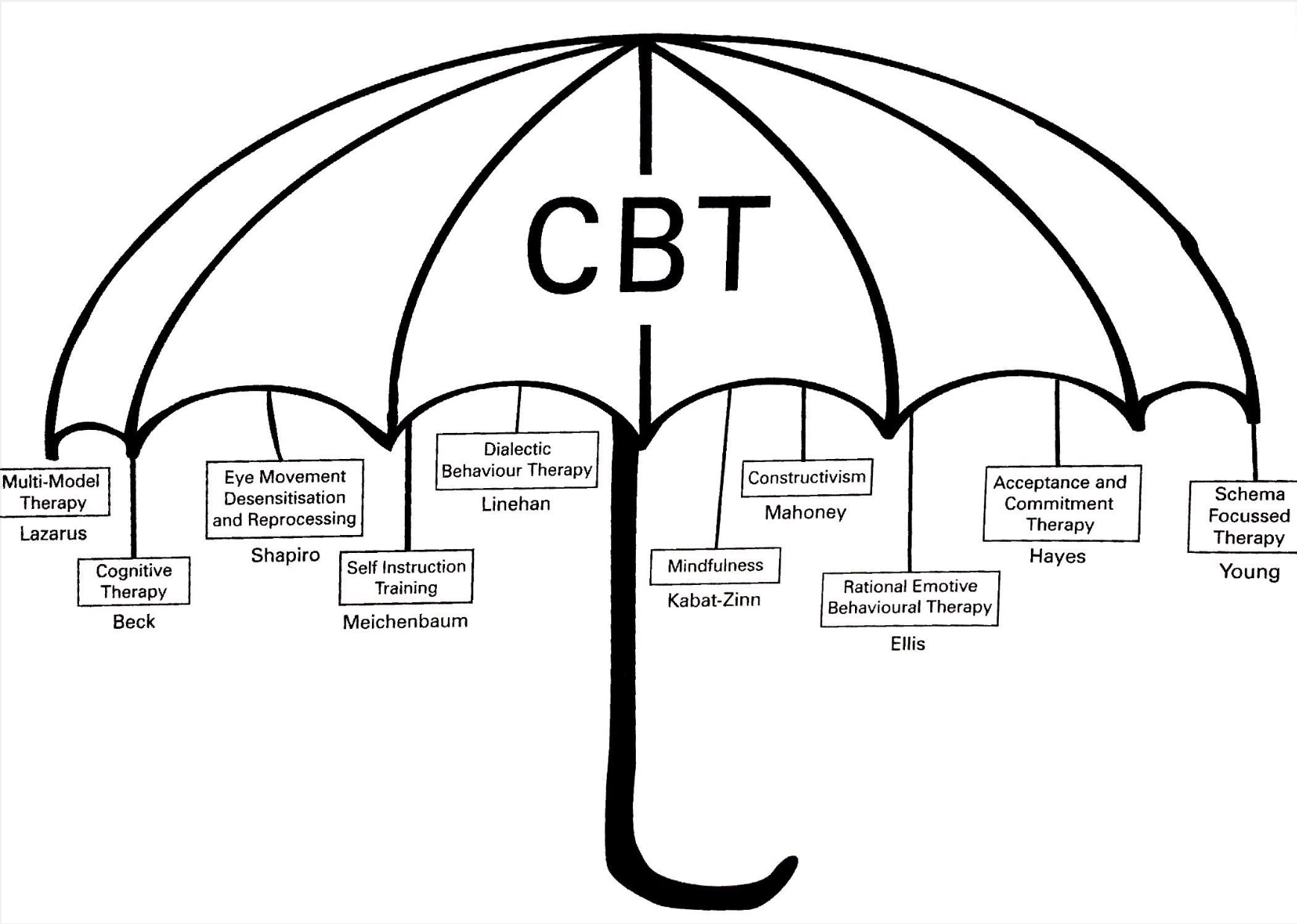
Cognitive Behaviour Therapy, commonly known as CBT, is an umbrella term for a broad school of psychological therapies. Although the therapies within this tradition differ in their language, techniques and areas of emphasis, they share an important underlying principle: people are influenced not only by the events that occur in their lives, but also by how they interpret, evaluate and respond to those events.
This idea has ancient philosophical roots. The Stoic philosopher Epictetus famously observed that people are disturbed not by things themselves, but by the views they take of them. Almost two thousand years later, this principle became central to the development of modern cognitive behavioural therapies.
Consider two people who receive similar criticism at work. One person might think, “I made a mistake, but I can learn from it,” and consequently feel disappointed but motivated to improve. Another might think, “This proves that I am completely incompetent, and everyone must think badly of me.” That person may experience intense anxiety, shame or depression and begin avoiding future challenges.
The event is similar, but the beliefs attached to it produce very different emotional and behavioural consequences.
This does not mean that difficult circumstances are unimportant or that distress is simply “all in your head.” Loss, trauma, illness, conflict and injustice can be genuinely painful. CBT does not ask people to pretend otherwise. Instead, it helps people distinguish between the unavoidable pain created by difficult circumstances and the additional suffering that may be produced by rigid, extreme or unhelpful beliefs.
A practical and empowering approach
CBT is generally a logical, structured and practical form of psychological therapy. Rather than focusing only on how a problem developed, CBT also asks what is maintaining the problem now and what can be done to change it.
The therapist and client usually work collaboratively to develop an understanding of the difficulty. They examine the relationships between situations, thoughts, beliefs, emotions, bodily sensations and behaviour. They then identify particular points at which change may be possible.
For example, a person experiencing social anxiety might believe:
“I must always come across well.”
“If someone notices that I am nervous, it will be humiliating.”
“If I am judged negatively, it means there is something fundamentally wrong with me.”
These beliefs may produce anxiety and physical symptoms such as blushing, shaking or a racing heart. The person may then avoid social situations, mentally rehearse conversations, speak very little or repeatedly seek reassurance. Although these strategies can provide temporary relief, they may also prevent the person from discovering that social discomfort is manageable and that negative evaluation is neither certain nor catastrophic.
A cognitive behavioural therapist may help the person examine the accuracy and usefulness of these beliefs, develop more flexible alternatives and gradually practise approaching situations they have been avoiding.
The aim is not merely to “think positively.” Positive thinking can be unrealistic and unconvincing. CBT is better understood as an effort to think more accurately, flexibly and constructively—and then to act in ways that support psychological health.
The origins of modern CBT
The first major cognitive behavioural therapy was Rational Emotive Behaviour Therapy, or REBT, developed by American psychologist Albert Ellis during the 1950s.
Ellis initially trained in psychoanalysis but became dissatisfied with its effectiveness and length. He observed that clients were often not distressed solely because of what had happened to them. Their distress was also influenced by the rigid demands and extreme conclusions they brought to those events.
REBT explains this through the ABC model:
A represents an activating event—something that happens or is anticipated.
B represents the person’s beliefs about that event.
C represents the emotional and behavioural consequences associated with those beliefs.
People commonly assume that A directly causes C: “My colleague criticised me, and therefore I became furious.” REBT proposes that the person’s beliefs at B are crucial. The person might be telling themselves, “They absolutely must not criticise me,” “I cannot stand being treated this way,” or “Their behaviour proves that they are a completely bad person.”
Ellis identified several common forms of irrational belief, including rigid demands, catastrophising, low frustration tolerance and the global rating of ourselves or other people. REBT helps clients actively question these beliefs and replace them with more flexible and realistic alternatives.
For example:
“I strongly prefer to be treated respectfully, but other people do not have to behave as I want them to. I dislike criticism, but I can tolerate it. Being criticised does not prove that I am worthless, nor does another person’s poor behaviour make them entirely bad.”
This more flexible belief may still result in disappointment, concern or annoyance. REBT does not seek to eliminate all negative emotion. Instead, it distinguishes between healthy negative emotions that help us respond constructively and unhealthy emotions that overwhelm us or lead to self-defeating behaviour.
Aaron Beck and Cognitive Therapy
During the 1960s, psychiatrist Aaron Beck developed Cognitive Therapy, initially through his work with depression. Beck identified recurring negative patterns in the thinking of depressed clients, including negative views of themselves, the world and the future.
He also described common cognitive distortions, such as:
All-or-nothing thinking
Overgeneralisation
Mind reading
Fortune-telling
Catastrophising
Discounting positive information
Selectively focusing on negative information
A person who makes one mistake, for instance, might conclude, “I always ruin everything.” Someone who does not receive an immediate reply to a message might think, “They must be angry with me.” These conclusions can feel factual even when they are based on incomplete evidence.
Cognitive Therapy helps clients learn to recognise automatic thoughts, examine the evidence for and against them, consider alternative explanations and test their predictions through experience. Over time, clients may also identify deeper assumptions and core beliefs, such as “I am unlovable,” “I am inadequate” or “I must never fail.”
Although REBT and Cognitive Therapy have meaningful theoretical differences, both helped establish the cognitive behavioural tradition. The term CBT now includes therapies influenced by one or both approaches, as well as treatments that draw heavily upon behavioural learning principles.
Behaviour is an essential part of CBT
Despite its name, CBT is not simply a process of talking about thoughts. Behavioural change is central to effective treatment.
Our actions can reinforce our beliefs. A person who fears having a panic attack may stop exercising because a rapid heartbeat feels dangerous. Avoiding exercise reduces anxiety in the short term, but it also prevents the person from learning that an increased heart rate is usually safe and tolerable.
Similarly, someone with depression may withdraw from enjoyable or meaningful activities because they feel unmotivated. This withdrawal can produce further isolation, inactivity and loss of satisfaction, which may deepen the depression.
Depending on the person’s needs, CBT may therefore include:
Gradual exposure to feared situations
Behavioural experiments
Activity scheduling
Problem-solving
Communication and assertiveness practice
Relaxation or attention-training strategies
Skills for managing strong emotions
Homework and between-session practice
Relapse-prevention planning
Change occurs not only through discussing new ideas but through repeatedly putting those ideas into practice. Clients learn by discovering, through experience, that they can tolerate discomfort, behave differently and respond more effectively than they previously believed.
Different approaches within the CBT tradition
Since the pioneering work of Ellis and Beck, a number of related approaches have been developed.
Acceptance and Commitment Therapy, or ACT, was principally developed by psychologist Steven C. Hayes and his colleagues. ACT teaches people to reduce their struggle with unwanted internal experiences, relate differently to difficult thoughts and take action guided by their personal values.
Dialectical Behaviour Therapy, or DBT, was developed by psychologist Marsha Linehan. It combines behavioural change strategies with acceptance, mindfulness and emotional regulation skills. DBT was initially developed for people experiencing chronic suicidal behaviour and borderline personality disorder, although its methods are now applied more broadly.
Schema Therapy, developed by psychologist Jeffrey Young, integrates cognitive, behavioural, attachment and experiential ideas. It focuses on deeply established patterns, known as schemas, which may develop when important emotional needs are not adequately met.
Mindfulness-Based Stress Reduction, developed by Jon Kabat-Zinn, helped introduce structured mindfulness practices into Western healthcare. Mindfulness has subsequently been incorporated into several therapies, including Mindfulness-Based Cognitive Therapy, ACT and DBT.
Other cognitive behavioural approaches include Exposure and Response Prevention for obsessive-compulsive disorder, Behavioural Activation for depression, Trauma-Focused CBT and specialised treatments for panic, insomnia, eating disorders and other difficulties.
A practising cognitive behavioural therapist may draw upon more than one of these approaches. However, techniques should not simply be assembled at random. Effective treatment requires a coherent understanding of the client’s problem and a clear rationale for why particular strategies are likely to help.
What happens during CBT?
CBT usually begins with an assessment of the person’s concerns, history, current circumstances and treatment goals. The therapist and client then develop a shared formulation: an individualised explanation of how the problem may have developed and what continues to maintain it.
Treatment may involve identifying distress-producing thoughts and beliefs, evaluating them and developing more helpful alternatives. However, insight alone is rarely enough. The client is also encouraged to practise new ways of behaving, tolerate difficult emotions and test old assumptions in everyday life.
CBT sessions are often structured and goal-directed. Therapist and client may agree on an agenda, review progress, work on a particular problem and identify something for the client to practise before the next appointment.
This structure does not mean CBT is cold, mechanical or impersonal. A strong therapeutic relationship remains essential. Good CBT is collaborative, compassionate and adapted to the person rather than applied as a rigid set of techniques.
How effective is CBT?
CBT is one of the most extensively researched families of psychological treatment. Evidence supports cognitive behavioural interventions for many difficulties, including anxiety disorders, depression, obsessive-compulsive disorder, post-traumatic stress, insomnia and a range of other psychological and behavioural problems.
For some conditions, particular forms of CBT are recommended as first-line treatments. However, no therapy works equally well for every person or every problem. Outcomes may be influenced by the nature and severity of the difficulty, the quality of the therapeutic relationship, the suitability of the treatment and the client’s opportunity to practise what is learned.
CBT is often described as a relatively short-term therapy, but its length varies. Some focused problems may improve over a small number of sessions, while longstanding, complex or recurring difficulties may require more extended treatment.
The goal is not necessarily to keep a person in therapy indefinitely. CBT aims to help clients become increasingly capable of understanding and responding to their own difficulties. Ideally, clients leave therapy with practical skills they can continue using long after treatment has ended.
Creating lasting psychological change
At its heart, CBT proposes that while we cannot completely control other people, the past or everything that happens to us, we can develop greater influence over how we interpret events and how we choose to respond.
The cognitive behavioural therapist helps the client identify beliefs and behavioural patterns that contribute to distress, examine whether those patterns are accurate or helpful and develop more flexible alternatives. The client then practises these alternatives in real situations until they become increasingly natural and effective.
The result is not a life without frustration, anxiety, sadness or disappointment. Such a life would be neither realistic nor necessarily desirable. Rather, CBT helps people experience difficult emotions in healthier and more manageable ways, respond constructively to adversity and pursue meaningful goals even when life is uncomfortable.
In this sense, CBT can be genuinely empowering. It teaches that our emotional reactions are understandable, but not always inevitable or unchangeable. By learning to think more flexibly, tolerate discomfort and behave more deliberately, people can develop changes that continue well beyond the therapy room.
Please click on this video where Dr Windy Dryden gives a brief and practical introduction to the cognitive behavioural approach of REBT